
How to Choose a Reliable OEM Pet Food Manufacturer in China: A Buyer’s Complete Checklist
Choosing an OEM pet food manufacturer in China isn’t just about prices and protein levels.
The right manufacturing partner should:
- Create a viable formula.
- Manage food-safety risks.
- Ensure batch consistency.
- Provide necessary documentation.
- Keep products fresh.
- Deliver orders on time.
A factory that makes a great sample but can’t match that quality on a larger scale can lead to issues for a pet food brand. This may result in complaints, delayed launches, regulatory troubles, and expensive recalls.
This guide helps importers, distributors, and pet food brands check a Chinese OEM manufacturer before they place an order.
Quick Answer: How Do You Choose a Reliable OEM Pet Food Manufacturer in China?
A reliable OEM pet food manufacturer should demonstrate:
- A legally registered manufacturing facility and a clearly documented export arrangement
- Relevant food-safety and quality-management systems
- Formulation capability for the intended species, life stage and market
- Traceable and controlled raw materials
- Stable automated production processes
- Batch testing and verifiable Certificates of Analysis
- Sufficient commercial production capacity
- OEM, ODM and packaging-customization capabilities
- Export documentation and destination-market support
- Transparent pricing, MOQ, lead time and payment terms
- Willingness to provide evidence and accept audits
- Consistent communication before and after production
Do not rely on a certificate, product sample or low quotation alone. Check the complete system behind the product.
Why the Manufacturer Matters to a Pet Food Brand
Pet food is a repeat-purchase product. Long-term success depends on more than launching an attractive package.
Customers expect each bag to deliver consistent:
- Aroma
- Appearance
- Kibble size
- Nutritional composition
- Palatability
- Digestive performance
- Packaging integrity
- Shelf-life stability
If quality changes between production runs, consumers might stop buying. This can happen even if the first batch did well.
The manufacturer so becomes part of the brand’s reputation. The controls on raw materials, formulation choices, production records, testing programs, and corrective actions all affect the final product sold under the customer’s name.
1. Verify That You Are Dealing with a Real Manufacturer
Many companies online claim to be manufacturers. However, many are just trading companies, sourcing agents, or intermediaries.
This doesn’t mean they are unsuitable. Buyers should know who will formulate, produce, test, and pack the product.
Ask the supplier to provide:
- Registered company name
- Business license
- Factory address
- Manufacturing scope
- Export registration information
- Name of the entity receiving payment
- Quality-management certificates
- Factory photographs and production videos
- Live video tour or on-site audit access
The company name on the contract, commercial invoice, bank account, certificates, and export documents must be the same. It should also be backed by a clear legal connection.
Questions to ask
- Is your company the actual manufacturer?
- Which factory will produce our order?
- Can we see the production line during a live video call?
- Which legal entity will sign the contract?
- Which legal entity will receive payment?
- Which entity appears on the export documents?
- Can the production facility be audited?
Warning signs
Be cautious when a supplier:
- Refuses to disclose the factory address
- Uses unrelated company names across different documents
- Will not show the production area
- Claims to manufacture every type of pet product without explaining its facilities
- Requests payment to an unrelated personal account
- Cannot identify the testing laboratory or production site
2. Check Export Eligibility for the Destination Market
A factory’s ability to export to one country does not automatically mean it can export to every market.
Pet food import requirements vary according to:
- Destination country
- Product category
- Animal-protein source
- Dry, wet, freeze-dried or treat classification
- Manufacturing process
- Product registration requirements
- Veterinary-health requirements
- Approved establishment lists
- Labeling rules
Ask the manufacturer about past exports and the documents they can provide.
Typical documents may include:
- Commercial invoice
- Packing list
- Certificate of origin
- Bill of lading
- Manufacturing information
- Ingredient and additive declarations
- Guaranteed analysis
- Certificate of Analysis
- Health or veterinary certificate, where applicable
- Free-sale certificate, where applicable
- Facility registration information
- Product-registration support documents
The importer should confirm the final requirements with the local authority in the destination country before starting production.
A responsible manufacturer will assist in gathering the needed information. However, they won’t say “no approval is needed” without reviewing the product and market first.
3. Evaluate Food-Safety and Quality-Management Systems
Certificates are useful, but buyers must examine what they cover.
Relevant systems may include:
- HACCP
- ISO 22000
- ISO 9001
- Good Manufacturing Practices
- Market-specific registrations
- Internal traceability and recall procedures
ISO 22000 outlines what a food-safety management system must include. It helps organizations spot and manage food-safety risks. It incorporates HACCP principles but is not a substitute for product-specific regulatory compliance. ISO 22000 food-safety management
When reviewing a certificate, verify:
- The exact legal company name
- The certified site address
- The scope of certification
- Issue and expiration dates
- Certification body
- Certificate number
- Whether it covers pet food or animal feed production
- Whether the certificate can be verified independently
A general business administration certificate doesn’t prove that a pet food production line is run properly.
Ask for evidence of implementation
A reliable supplier should be able to explain:
- Critical control points
- Incoming-material inspection
- Cleaning and sanitation procedures
- Pest-control programs
- Metal-detection controls
- Allergen and cross-contact controls
- Nonconforming-product management
- Batch-release procedures
- Complaint handling
- Traceability and recall testing
The objective is not to collect the largest number of certificates. It is to determine whether the factory uses a functioning quality system every day.
4. Confirm Formulation and Nutritional Capability
A high crude-protein number does not automatically indicate a high-quality formula.
The value of a formula depends on:
- Protein sources
- Protein digestibility
- Amino-acid balance
- Fat sources and oxidation control
- Fiber type and level
- Mineral balance
- Vitamin stability
- Palatability
- Intended species and life stage
- Processing conditions
- Target-market requirements
Ask who develops the formulas and how nutritional values are verified.
The manufacturer should be able to discuss:
- Puppy, adult and senior-dog nutrition
- Kitten, adult and senior-cat nutrition
- All-life-stages formulas
- Sensitive-digestion formulas
- High-protein or high-fat products
- Breed- or channel-specific positioning
- Functional ingredients
- Ingredient substitutions
- Cost and nutrition trade-offs
- Expected product claims
AAFCO and FEDIAF are not factory certificates
This distinction is important.
AAFCO offers model rules, ingredient definitions, label advice, and nutrient profiles for use in the United States. AAFCO does not simply “certify” a Chinese factory. The supplier should explain if a formula meets a relevant AAFCO nutrient profile. They should also clarify how they support that claim.
AAFCO calls the nutritional-adequacy statement a key part of pet food labels. It shows if the product is complete and balanced for a specific life stage. AAFCO pet food labeling guidance
For products targeting European markets, check the formulas with the latest FEDIAF Nutritional Guidelines for complete and complementary pet food for cats and dogs. Also, consider the legal requirements of the destination country. FEDIAF Nutritional Guidelines 2025
Check the AAFCO model regulations and state timelines. They can change, so confirm the correct version and state requirements before approving a U.S. label.
Ask the manufacturer:
- Which nutritional standard is being used?
- Which species and life stage is the formula intended for?
- Is the product complete or complementary?
- Are the nutrient values calculated, laboratory-tested or both?
- Which claims can be supported?
- Can the formula be adjusted for the destination market?
Avoid making absolute claims like “prevents allergies” or “cures digestive problems.” Only use them if they are legally allowed and backed by solid product evidence.
5. Investigate Raw-Material Control and Traceability
Finished-product consistency begins with controlled ingredient sourcing and inspection.
Buyers should understand:
- Where animal proteins are sourced
- How suppliers are approved
- How incoming materials are inspected
- How batches are identified
- How temperature-sensitive ingredients are stored
- How oxidation is controlled
- How rejected materials are managed
- Whether the supplier can trace a finished batch back to its ingredients
A strong traceability system should connect:
Raw-material source → Incoming inspection → Ingredient batch → Production batch → Quality testing → Packaging batch → Finished-product shipment
Traceability is important. It helps manufacturers check complaints, identify affected products, and act quickly to fix issues.
Questions to ask
- Can you identify the raw-material batches used in each finished batch?
- How are poultry, fish and meat ingredients approved?
- Are incoming materials tested?
- How are fats and oils protected from oxidation?
- Can you provide a traceability example?
- How quickly can you trace a finished product back to its ingredients?
6. Examine the Manufacturing Process
Buyers should understand how the product moves through the factory.
A typical dry pet food process may include:
- Raw-material receiving
- Inspection and batch identification
- Grinding
- Automated weighing and batching
- Mixing
- Conditioning
- Extrusion
- Drying
- Fat and palatant coating
- Cooling
- Screening
- Metal detection
- Packaging
- Finished-product inspection
- Batch release
Equipment ownership matters less than documented process control, preventive maintenance and repeatability.
Why automation matters
Automated production can help reduce:
- Manual dosing errors
- Uncontrolled human contact
- Cross-contamination risks
- Process variation
- Inconsistent mixing
- Packaging-weight deviations
Automation does not guarantee quality by itself. Formulas must be validated. Staff should be trained. Preventive maintenance is key. Process monitoring and finished-product testing must also support it.
Ask how the factory controls:
- Ingredient weighing
- Mixing time
- Extrusion temperature and pressure
- Drying conditions
- Final moisture
- Fat-coating accuracy
- Cooling
- Kibble dimensions
- Packaging weight
- Seal integrity
7. Assess Special Processing Capabilities Carefully
Some OEM projects require more than standard extrusion.
Examples include:
- Enzymatic hydrolysis
- High-fat coating
- Sensitive-digestion formulations
- Limited-protein products
- Freeze-dried inclusions
- Functional ingredients
- Large or customized kibble shapes
- Nitrogen-flushed packaging
When a supplier promotes a special technology, ask how it is controlled and verified.
For enzymatic hydrolysis, relevant variables may include:
- Protein source
- Enzyme type
- Enzyme dosage
- Temperature
- Reaction time
- Mixing
- Moisture
- Degree of hydrolysis
- Reaction termination
- Peptide-size target, where specified
The word “hydrolyzed” alone does not prove that a product is hypoallergenic or suitable for a clinical elimination diet.
The result relies on four main factors:
- the raw material
- the hydrolysis degree
- cross-contact prevention
- product-specific validation
Read more: Enzymatic Hydrolysis in Pet Food
8. Review the Testing Program and Certificate of Analysis
Do not ask only, “Do you test the product?”
Ask:
- What is tested?
- How often?
- Which methods are used?
- Who performs the test?
- What happens if a result fails?
- Is every commercial batch released through a documented procedure?
Depending on the product and market, testing may include:
- Moisture
- Crude protein
- Crude fat
- Crude fiber
- Crude ash
- Calcium
- Phosphorus
- Taurine
- Chloride
- Microbiological indicators
- Pathogens
- Mycotoxins
- Heavy metals
- Water activity
- Packaging-seal integrity
- Net weight
- Kibble size and appearance
A Certificate of Analysis should be connected to a specific production batch. It should not be a generic document reused for unrelated shipments.
What to verify on a COA
- Product name
- Batch or lot number
- Production date
- Sampling date
- Test items
- Specification limits
- Actual results
- Test methods, when available
- Laboratory identity
- Authorization or signature
For products sold in the United States, the FDA’s animal-food rules require good manufacturing practices. They also include risk-based preventive controls. Facilities within scope must identify hazards and apply the right controls. They can’t just rely on end-product testing. FDA Food Safety Modernization Act and Animal Food
The strongest quality system combines preventive controls with appropriate finished-product verification.
9. Confirm Batch-to-Batch Consistency
Sample approval does not prove that the same specification can be reproduced at commercial scale.
Before you approve a supplier, check if the factory can make the same formula on a large scale.
Ask how it maintains consistency in:
- Ingredient specifications
- Nutritional values
- Kibble shape
- Kibble density
- Color
- Aroma
- Coating
- Moisture
- Palatability
- Packaging
- Net weight
Useful controls include:
- Approved raw-material specifications
- Standard operating procedures
- Automated dosing
- Defined processing parameters
- In-process inspections
- Retained samples
- Batch records
- Finished-product specifications
- Corrective-action procedures
Buyers should ask for samples from past batches. Then, they can compare these when new orders come in.
10. Evaluate Production Capacity and Delivery Reliability
A factory’s advertised total capacity does not automatically mean your order can be produced immediately.
Ask about:
- Monthly production capacity
- Available capacity
- Minimum production batch
- Peak-season schedule
- Formula-change cleaning time
- Packaging-material lead time
- Production lead time
- Inspection and release time
- Container-booking coordination
- Procedures for delayed materials
Large capacity is valuable only when production planning and quality control remain reliable.
The manufacturer should give separate timelines for:
- Formula confirmation
- Sample development
- Packaging design
- Printing-cylinder or plate preparation
- Packaging production
- Commercial manufacturing
- Quality testing
- Export preparation
- Shipment
Avoid suppliers who promise delivery dates that seem too good to be true. Check the formula, packaging, and raw material availability first.
11. Understand OEM, ODM and Private-Label Services
These terms are often confused, but they mean different things. They can show varying levels of customization.
Private label
The buyer selects an existing, validated formula and sells it under its own brand.
Best suited for:
- Faster market entry
- Lower development risk
- Established product positioning
- Buyers who do not need a unique recipe
OEM
The manufacturer makes products based on a set specification. This includes the formula, packaging, and brand requirements.
Best suited for:
- Established product concepts
- Customer-owned specifications
- Customized packaging
- Defined quality standards
ODM
The manufacturer supports product development, which may include:
- Market positioning
- Formula development
- Ingredient selection
- Nutritional targets
- Product claims
- Packaging recommendations
- Sample development
- Commercial-scale conversion
Best suited for buyers that want a differentiated product but need technical development support.
Before beginning, clarify:
- Who owns the formula?
- Can the same formula be sold to another customer?
- Who owns the packaging design?
- Are development fees refundable?
- How many sample revisions are included?
- What happens if the sample does not scale successfully?
- Are confidentiality agreements available?
12. Review MOQ and Mixed-Container Policies
MOQ should be stated per product or SKU, not only per order.
One SKU may be defined by a unique combination of:
- Formula
- Kibble shape
- Package size
- Package design
- Brand
- Label language
- Production specification
Ask:
- What is the MOQ per formula?
- What is the MOQ per packaging design?
- Can different SKUs be loaded in one container?
- Is there a minimum quantity for each SKU?
- Can standard packaging be used for an initial order?
- Are printed-bag minimums different from production minimums?
- Can unused packaging be stored for repeat orders?
- Who owns unused printed packaging?
A supplier with a low MOQ might be using bulk products, manual repacking, or generic packaging. That may be acceptable, but the buyer should understand exactly what is being supplied.
13. Inspect Packaging and Shelf-Life Protection
Packaging is part of the product’s quality system.
The appropriate structure depends on:
- Product fat level
- Expected shelf life
- Package size
- Climate
- Distribution time
- Light exposure
- Oxygen sensitivity
- Moisture sensitivity
- Mechanical strength
- Retail presentation
Ask the manufacturer to explain:
- Packaging layers and materials
- Oxygen-barrier performance
- Moisture-barrier performance
- Seal strength
- Drop resistance
- Zipper options
- Nitrogen flushing
- Residual-oxygen targets
- One-way valve options
- Carton requirements
- Transport testing
High-fat pet food requires careful oxidation control. A one-way degassing valve should not automatically be described as a freshness solution. It lets internal gas escape under specific conditions. But it doesn’t replace high-barrier packaging, strong sealing, oxygen control, or a suitable antioxidant system.
For small retail packs, also calculate:
- Packaging cost per bag
- Bags per carton
- Carton cost
- Container utilization
- Final cost per kilogram
A lower product price per metric ton can be offset by inefficient packaging and loading.
14. Require a Clear Commercial Quotation
A professional quotation should identify:
- Product and formula
- Nutritional specification
- Package size
- Packaging material
- Quantity
- Price per metric ton
- Price per bag, where relevant
- Container type
- Estimated loading quantity
- Incoterm and named place or port
- Payment terms
- Lead time
- Quotation validity
- Included services
- Excluded costs
For example:
FOB Qingdao, Incoterms® 2020. This is based on the final packaging details and the approved container-loading plan.
Do not compare an EXW quotation with another supplier’s FOB or CIF quotation. Confirm whether the price includes:
- Product
- Inner packaging
- Printed bags
- Cartons
- Inland transportation
- Export customs clearance
- Port charges
- Ocean freight
- Insurance
- Destination charges
- Import duties and taxes
15. Protect Payment and Contractual Terms
Before paying a deposit, confirm:
- Legal seller name
- Bank-account beneficiary
- Product specifications
- Approved formula
- Approved packaging artwork
- Quantity
- Price
- Delivery term
- Payment schedule
- Inspection rights
- Nonconforming-product procedure
- Confidentiality
- Intellectual-property ownership
- Dispute-resolution mechanism
For a new supplier, avoid transferring funds to an individual or unrelated entity.
The sales contract and purchase order should use the same product specification. Important technical details should not exist only in WhatsApp messages.
16. Audit the Factory Before a Major Order
A factory audit can be conducted:
- On site
- By a qualified third party
- Through an initial live video assessment
- Through document review followed by physical verification
An audit should cover:
- Raw-material warehouse
- Production area
- Extrusion and drying
- Coating and cooling
- Enzymatic-hydrolysis equipment, when relevant
- Laboratory
- Packaging line
- Finished-product warehouse
- Cleaning controls
- Pest control
- Traceability
- Retained samples
- Nonconforming products
- Employee hygiene
- Equipment maintenance
The audit should cover active production and storage areas, not only the showroom or meeting area.
OEM Pet Food Manufacturer Evaluation Scorecard
Use this scorecard before selecting a supplier.
Important: This scorecard is a practical buyer-screening tool developed for preliminary supplier evaluation. It is not an official regulatory, certification or audit standard. Buyers should change the weight for the product category and market. They must also check all important claims on their own.
Evaluation Area and Weight
- Legal identity and export eligibility (10)
- Verify licenses, registrations, and factory identity.
- Food-safety systems (15)
- Check HACCP, ISO 22000, and implementation records.
- Formulation capability (15)
- Review standards, nutrition team, and customization.
- Raw-material control (10)
- Ensure supplier approval, inspection, and traceability.
- Manufacturing process (10)
- Evaluate automation, process controls, and maintenance.
- Testing and COA (10)
- Confirm batch-specific testing and release.
- Batch consistency (10)
- Check specifications, records, and retained samples.
- Packaging and shelf life (5)
- Assess barrier, sealing, and oxidation protection.
- Capacity and delivery (5)
- Verify available capacity and realistic lead time.
- Export support (5)
- Review documents and destination-market experience.
- Communication and transparency (5)
- Provide evidence, responsiveness, and audit access.
Total: 100
Recommended interpretation
- 85–100: Strong preliminary candidate; documentation and claims still require verification
- 70–84: Potential candidate; resolve identified gaps before approval
- 50–69: Significant information gaps; an additional audit is recommended
- Below 50: Do not approve until major deficiencies are resolved
12 Essential Questions to Ask an OEM Pet Food Factory
- Are you the actual manufacturer?
- What is your registered company name?
- Which facility will manufacture our product?
- Is the facility and product eligible for the destination market?
- What food-safety systems do you operate, and can the certificates be verified?
- Which nutritional standard and life stage will the formula target?
- Can every finished batch be traced to its raw materials?
- Which tests are performed, and can you provide a batch-specific COA?
- How do you control commercial-scale batch consistency?
- What are the MOQ, available capacity and realistic lead time?
- Can we audit the factory and review active production areas?
- Who owns the formula, artwork and unused packaging?
Common Red Flags
Avoid or investigate further when a supplier:
- Provides only generic certificates
- Cannot connect a COA to a batch number
- Says every formula is automatically “AAFCO certified”
- Promises guaranteed hypoallergenic performance without evidence
- Refuses an audit or live factory tour
- Cannot explain raw-material traceability
- Gives the same COA for multiple products
- Offers an unrealistically low MOQ without explaining production arrangements
- Quotes a price without specifying packaging or trade terms
- Changes the bank beneficiary shortly before payment
- Promises immediate production before packaging is ready
- Cannot explain how nonconforming products are handled
- Focuses only on crude protein and price
- Makes regulatory promises without checking the destination market
Why Pet Secret Biotechnology Is Built for OEM and Private-Label Production
Pet Secret Biotechnology Co., Ltd. is an OEM and ODM pet food manufacturer located in Linyi, Shandong, China.
Our manufacturing platform is designed around five connected capabilities.
1. More Than 30 Production-Proven Formulas
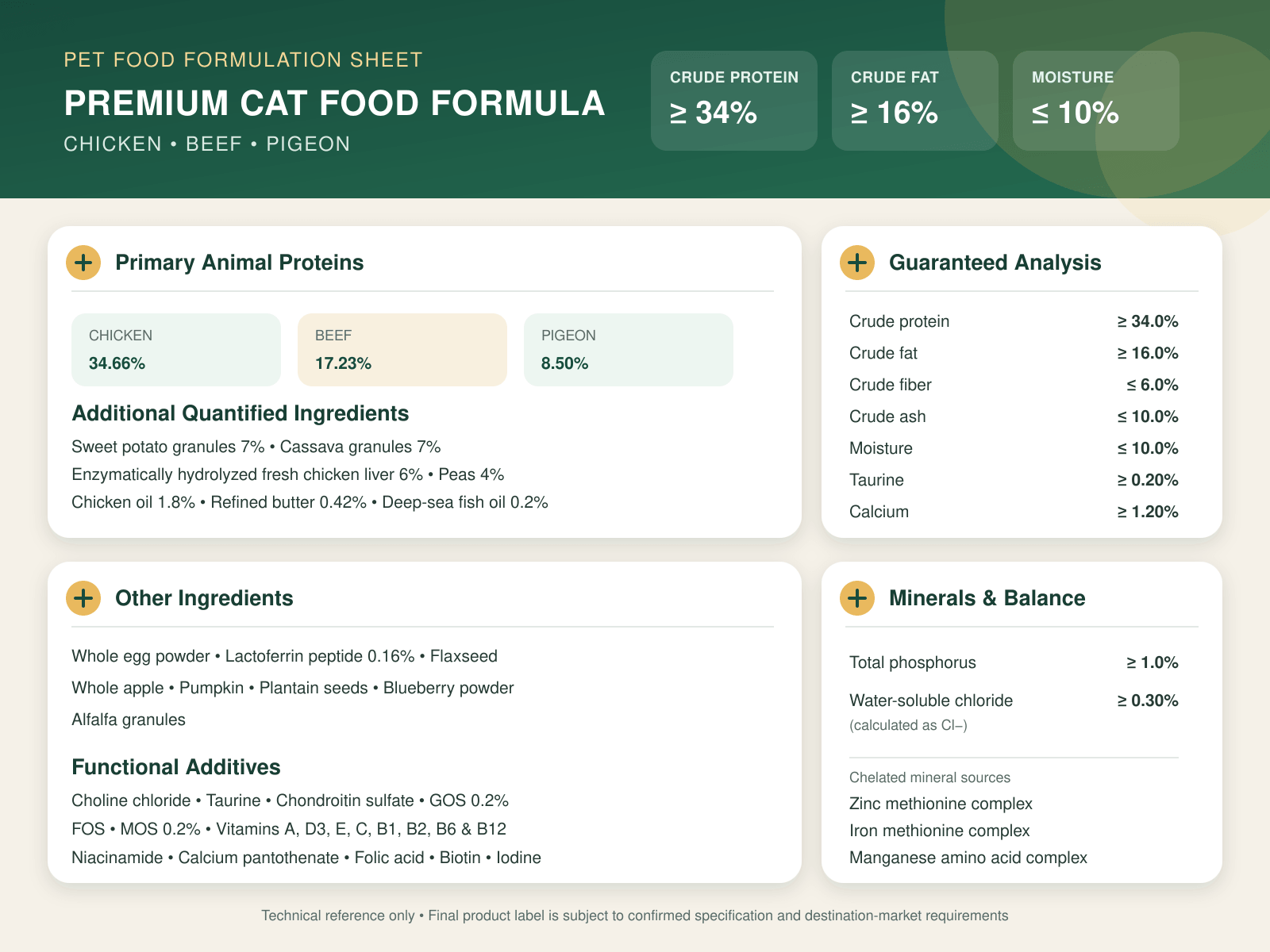
We have over 30 dog and cat food formulas. These are made for commercial use and cover various nutritional needs and market types.
Buyers can:
- Select an existing formula for faster market entry
- Adjust a validated formula
- Develop a customized ODM product
- Create high-protein, high-fat or sensitivity-focused products
- Select formulas for retail, distributors, breeders or premium channels
2. Farm-to-Bowl Raw-Material Control
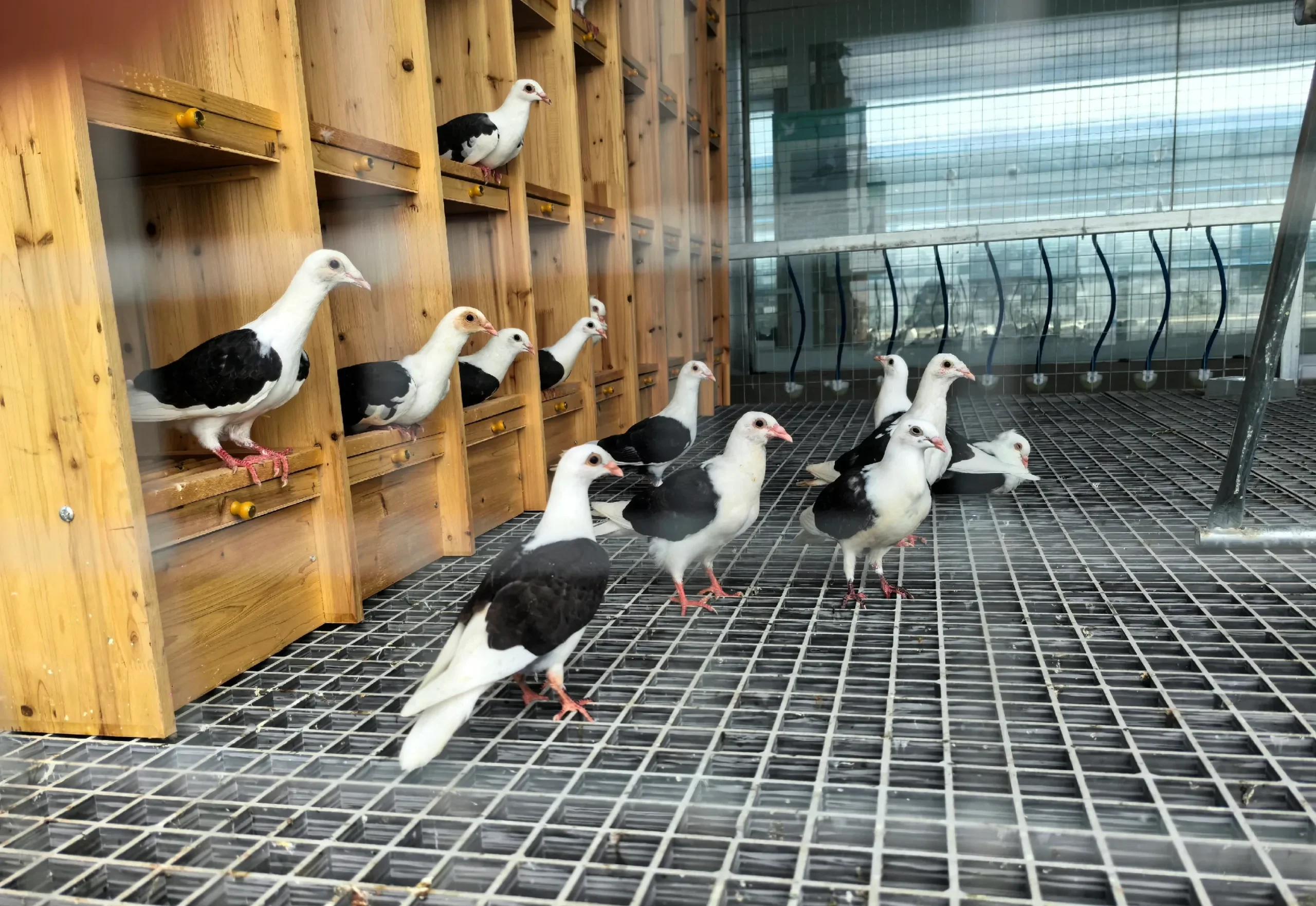
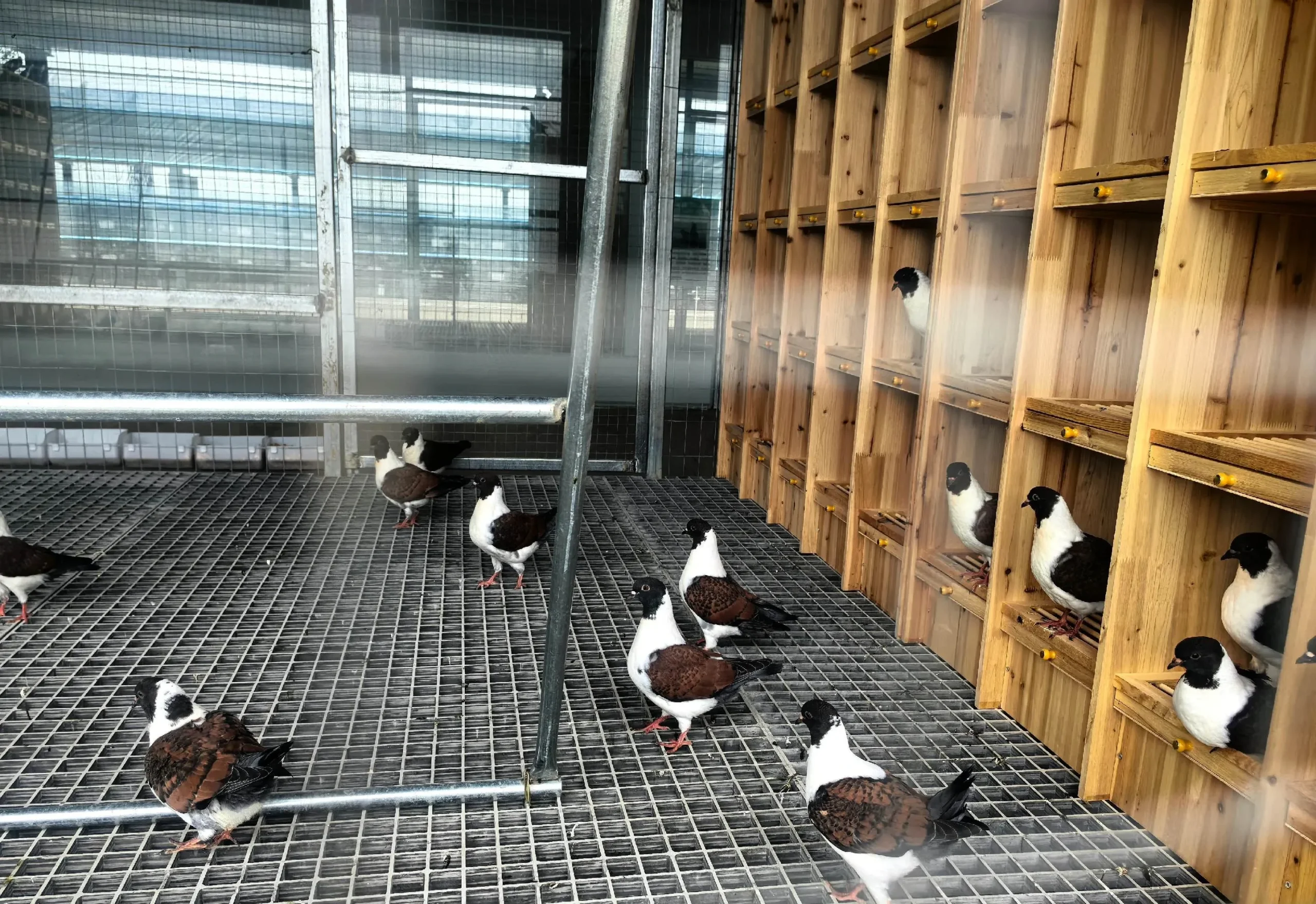
Our Farm-to-Bowl supply chain features a 13.3-hectare farm for poultry and pigeons. It uses automated systems and standard breeding practices.
This gives us better control over chosen poultry and pigeon raw materials. It also supports our Farm-to-Bowl traceability model.
Read more: Farm-to-Bowl Pet Food Manufacturing
3. Fully Enclosed Automated Manufacturing
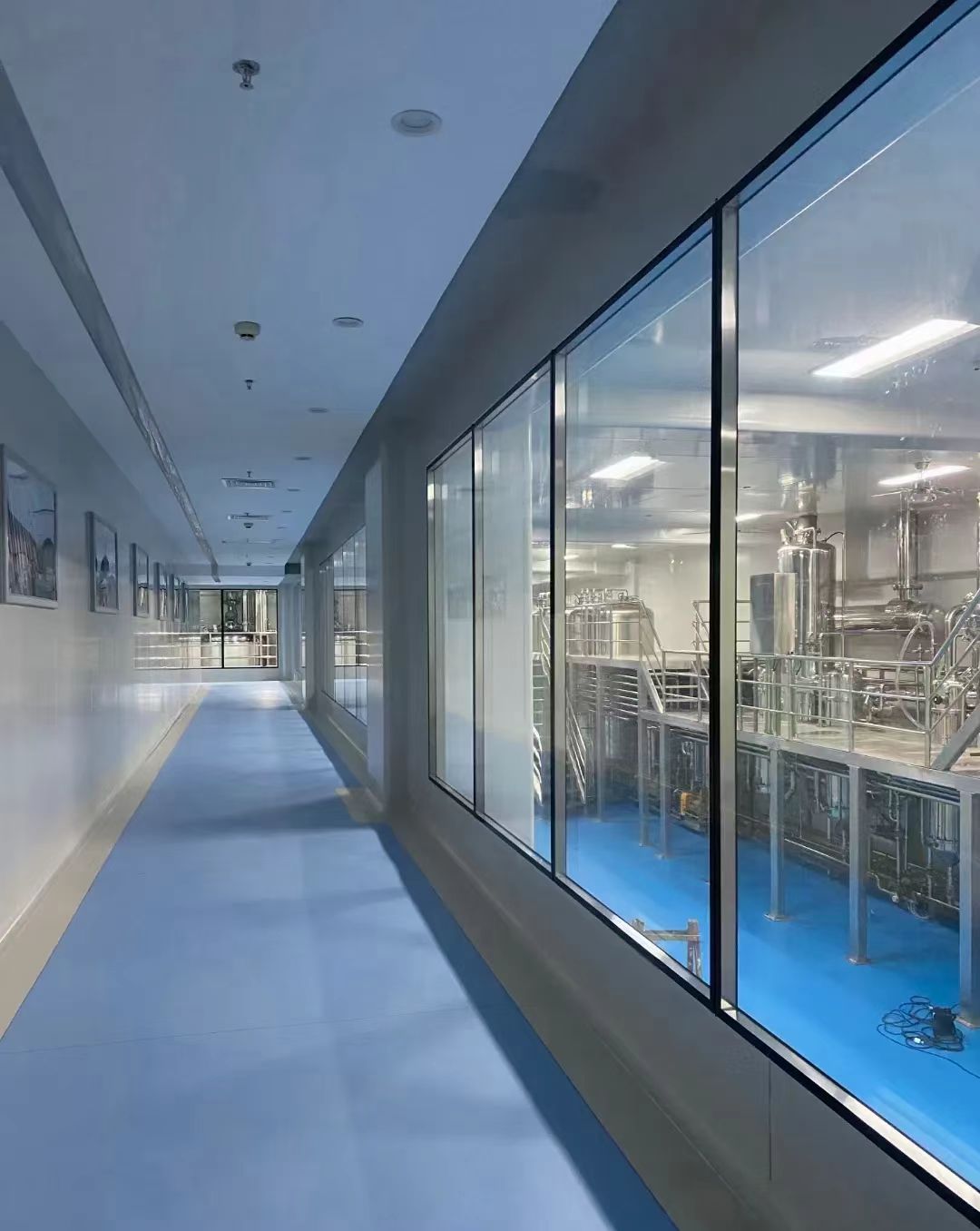
Our enclosed automated production system reduces unnecessary human contact and supports:
- Accurate batching
- Repeatable processing
- Reduced contamination risk
- Stable product quality
- Automated packaging
- Batch production records
Read more: Fully Automated Pet Food Manufacturing
4. Precision Enzymatic Hydrolysis
We use a Siemens control system to manage our enzymatic-hydrolysis process. This ensures accurate and repeatable processing.
This capability can be used for:
- Highly digestible formulas
- Sensitive-digestion positioning
- Hydrolyzed animal proteins
- Palatability development
- Customized OEM products
The final claim and product positioning rely on a few key factors: the level of hydrolysis, the full formula, testing, and the regulations of the target market.
5. Quality Systems and Batch Verification
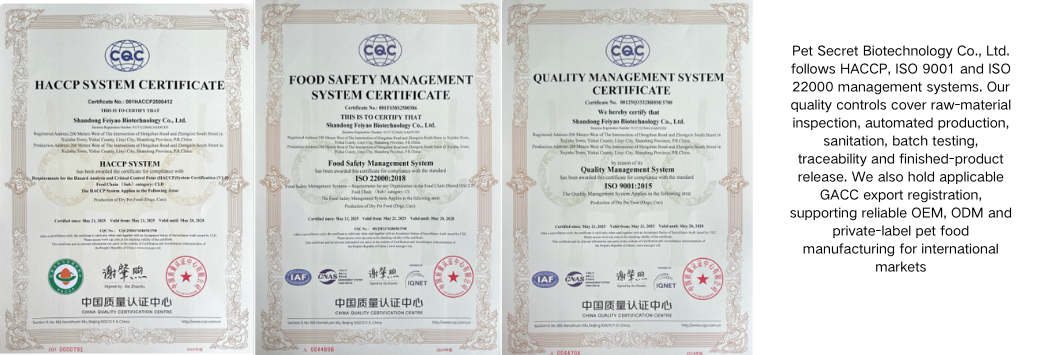
Our operation follows:
- HACCP
- ISO 9001
- ISO 22000
- GACC export-manufacturer registration for the applicable registered product scope
- Batch quality inspections
- Product traceability
- COA support
- SGS testing according to agreed project requirements
Our dry pet food facility has a designed production capacity of up to approximately 11,000 metric tons per month. Scheduling and available capacity depend on product specs, packaging, and the confirmed production plan.
Our OEM Cooperation Process
Step 1: Buyer and Market Assessment
We confirm:
- Destination country
- Customer type
- Sales channel
- Target consumer
- Product category
- Price positioning
- Expected order volume
Step 2: Product and Formula Selection
The buyer can select:
- An existing formula
- A modified formula
- A fully customized ODM formula
Step 3: Nutritional and Commercial Review
We review:
- Protein and fat targets
- Ingredient preferences
- Life stage
- Functional positioning
- Target cost
- Regulatory considerations
Step 4: Packaging Development
We confirm:
- Package size
- Bag structure
- Printing
- Zipper
- Valve, when appropriate
- Nitrogen flushing
- Carton requirements
- Label language
Step 5: Sample Confirmation
Samples are evaluated for:
- Appearance
- Aroma
- Kibble size
- Palatability
- Formula
- Nutritional specification
- Packaging concept
Step 6: Contract and Production
After confirming specifications, quantity, payment and delivery terms, the order enters production planning.
Our standard minimum order is usually 5 metric tons per product or SKU. This depends on the formula and packaging needs.
Step 7: Testing and Batch Release
The finished batch is inspected according to the approved specification. Required commercial and quality documents are prepared before shipment.
Step 8: Export and Long-Term Support
We support:
- Export-document preparation
- Product information
- Packaging updates
- Repeat-order planning
- Formula optimization
- Additional product development
Frequently Asked Questions
What is an OEM pet food manufacturer?
An OEM pet food manufacturer creates dog food, cat food, or similar products. They follow a set formula, specification, packaging, and brand guidelines for another company.
What is the difference between OEM and private-label pet food?
Private label commonly uses an existing manufacturer formula with the buyer’s branding. OEM may involve more detailed buyer specifications, while ODM includes broader product-development support.
What is the normal MOQ for OEM pet food in China?
MOQ varies by factory, formula, production line and packaging. At Pet Secret Biotechnology, the standard MOQ is generally 5 metric tons per product or SKU, subject to final project requirements.
Can different pet food products be loaded in one container?
Mixed-container loading is possible if each product meets its minimum production and packaging quantity. The final loading plan depends on package size, carton dimensions and product density.
Can a Chinese manufacturer formulate to AAFCO requirements?
A qualified manufacturer can develop a formula intended to meet the relevant AAFCO dog or cat food nutrient profile. AAFCO should not be presented as a simple factory certification. Nutritional adequacy and labeling must be substantiated appropriately.
Can the manufacturer create a formula for the European market?
A manufacturer can follow the current FEDIAF nutritional guidelines. The product, its ingredients, claims, labeling, and import documents must follow the rules of the destination market.
What documents should a manufacturer provide?
Documents depend on the destination and product.
Common documents are:
- Invoice
- Packing list
- Ingredient list
- Guaranteed analysis
- COA
- Certificate of origin
- Relevant health, registration, or manufacturing documents.
How do I verify batch quality?
Request a batch-specific COA, production lot number, specification sheet and relevant laboratory results. The manufacturer should explain its batch-release and traceability procedures.
Should I choose the supplier with the lowest price?
Not automatically.
Compare the following using the same criteria:
- Formula
- Ingredient quality
- Testing methods
- Packaging
- MOQ
- Loading quantity
- Trade terms
- Documentation
- Batch consistency
Can I visit the factory?
A transparent OEM manufacturer should allow factory visits. They should also support third-party audits and live video assessments. This is subject to hygiene, confidentiality, and production safety needs.
Final Buyer Checklist
Before approving an OEM pet food manufacturer in China, confirm that you have received and reviewed:
- Business license
- Factory identity and documented export arrangement
- Destination-market eligibility
- Quality certificates and certified scope
- Approved formula, nutritional standard and guaranteed analysis
- Ingredient and additive declarations
- Batch-testing plan, COA format and traceability procedure
- Packaging specification, MOQ and container-loading estimate
- Lead time, Incoterm and payment terms
- Sample-approval and nonconforming-product procedures
- Formula, artwork and unused-packaging ownership
- Signed contract
If any essential point remains unclear, resolve it before paying the production deposit.
Looking for a Reliable OEM Pet Food Manufacturer in China?
Pet Secret Biotechnology Co., Ltd. Offers OEM, ODM, and private-label pet food manufacturing. We cater to importers, distributors, and pet food brands in global markets.
Our capabilities include:
- More than 30 production-proven dog and cat food formulas
- Customized product development
- Controlled poultry and pigeon raw materials
- Farm-to-Bowl traceability
- Fully enclosed automated production
- Siemens-controlled enzymatic hydrolysis
- HACCP, ISO 9001 and ISO 22000 systems
- Batch testing and COA support
- Automated packaging
- Designed dry-food production capacity of up to approximately 11,000 metric tons per month
- Standard MOQ from 5 metric tons per product
- Export-document support
Contact our team with the following information:
- Destination country
- Dog food, cat food or both
- Desired formula
- Target protein and fat levels
- Package size
- Expected quantity
- Own brand or private label
- Target price range
We will recommend the most appropriate formula, packaging and cooperation model for your market.
Request an OEM Pet Food Quotation →