
Written by: Pet Secret Biotechnology Technical Team
Technical review: Pet Food Formulation and Quality Control Department
Last updated: August 2026
A good sample can show what a pet food product might become. It cannot prove that every commercial batch will have the same formula, nutritional values, appearance, packaging or shelf-life performance.
For a private label buyer, real quality control begins before the first production run. The buyer and manufacturer need to agree on what will be made, how it will be controlled, which results will be checked and what evidence will be supplied with the finished order.
This guide explains the essential checks without turning the process into a factory audit manual. It is designed for importers, distributors, retailers and brand owners working with an OEM or private label pet food manufacturer.
Quick answer: Before approving production, confirm six things: a written product specification, controlled raw materials, repeatable manufacturing, a risk-based testing plan, batch-specific traceability and a clear procedure for products that do not meet the agreed requirements.
These controls matter more than the number of certificates shown in a sales presentation.
For a broader explanation of formula selection, MOQ, packaging and production, see our Private Label Pet Food Manufacturing Guide.
What Does Good Pet Food Quality Control Actually Mean?
Pet food quality control is the system used to keep an approved product consistent from one batch to the next.
It covers more than laboratory testing. The process begins with ingredient and product specifications, continues through manufacturing and packaging, and ends with batch review and release.
A useful quality-control system answers four simple questions:
- What product did the buyer approve?
- Did the factory follow the approved materials and process?
- Does the finished batch meet the agreed limits?
- Can the factory trace and contain the batch if a problem appears later?
The Codex General Principles of Food Hygiene combines good hygiene practices with HACCP-based preventive control. The U.S. FDA animal-food rule also requires covered facilities to identify relevant hazards and apply risk-based preventive controls.
The common principle is straightforward: safety and consistency must be built into production. Finished-product testing is important, but testing alone cannot correct poor raw materials, uncontrolled processing, or weak traceability.
Official references: Codex General Principles of Food Hygiene and FDA Preventive Controls for Animal Food.
What Must Be Agreed Before Production?
The most important quality document is usually the written product specification.
A quotation that shows only crude protein, crude fat, and price per metric ton is not enough. Two products can display similar headline values while using different ingredients, processing conditions, package structures and acceptance limits.
A complete specification needs to identify:
- The intended species and life stage
- The approved ingredient and additive declarations
- Target or guaranteed nutritional values
- Kibble size, shape and physical appearance
- Package material, size and net weight
- Shelf-life target and required storage conditions
The buyer must also understand how nutritional values are expressed. The FDA explains that guaranteed analysis values on pet food labels are generally shown on an as-fed basis, while nutrient profiles may be expressed on a dry-matter basis. Comparing values on different bases can create a misleading result.
The FDA explains guaranteed analysis and dry-matter comparison.
Formula approval and label approval are related, but they are not the same decision. A formula may be developed toward an AAFCO or FEDIAF nutritional profile, while the finished label still requires review for the intended market.
Manufacturers should not describe a product as “AAFCO certified.” AAFCO does not certify individual pet food products.
Once the specification is signed, the formula code and revision number should remain consistent across the purchase order, production record, packaging artwork, and Certificate of Analysis. Any later formula or packaging change needs written approval.
How Are Ingredients and Production Controlled?
Finished-product consistency starts with the ingredients entering the factory.
A manufacturer needs defined specifications for major raw materials, along with procedures for supplier approval, incoming inspection, lot identification, and storage. If an ingredient does not meet the agreed requirements, it must be isolated before it enters production.
Pet Secret Biotechnology operates an approximately 13.3-hectare (33-acre) poultry and pigeon farming base. This gives us more direct control over selected animal-protein raw materials and supports our Farm-to-Bowl pet food traceability system.
An owned farming base is an advantage, but it does not replace routine quality controls. Internal and externally purchased materials both require specifications, identification and appropriate inspection.
The next challenge is manufacturing consistency.
For dry extruded pet food, changes in weighing, mixing, extrusion, drying or coating can affect:
- Nutritional composition
- Moisture
- Kibble density
- Surface condition
- Aroma
- Palatability
- Shelf-life stability
A controlled process records the parameters that matter for the approved product. This may include ingredient weights, mixing time, extrusion conditions, final moisture, fat application, cooling, metal detection, package weight, and seal condition.
Pet Secret uses a fully enclosed automated pet food manufacturing system to support accurate batching, repeatable processing, and production records while reducing unnecessary external contact.
Automation improves repeatability, but it does not guarantee quality by itself. Equipment still requires maintenance, sanitation, and monitoring. Staff must respond correctly when a value moves outside its approved range.
Special formulas may need additional controls. A hydrolyzed-protein or limited-ingredient product, for example, requires attention to production sequencing, cleaning, and cross-contact prevention. The word “hydrolyzed” alone does not prove that a finished product is hypoallergenic.
What Testing and COA Evidence Should Buyers Receive?
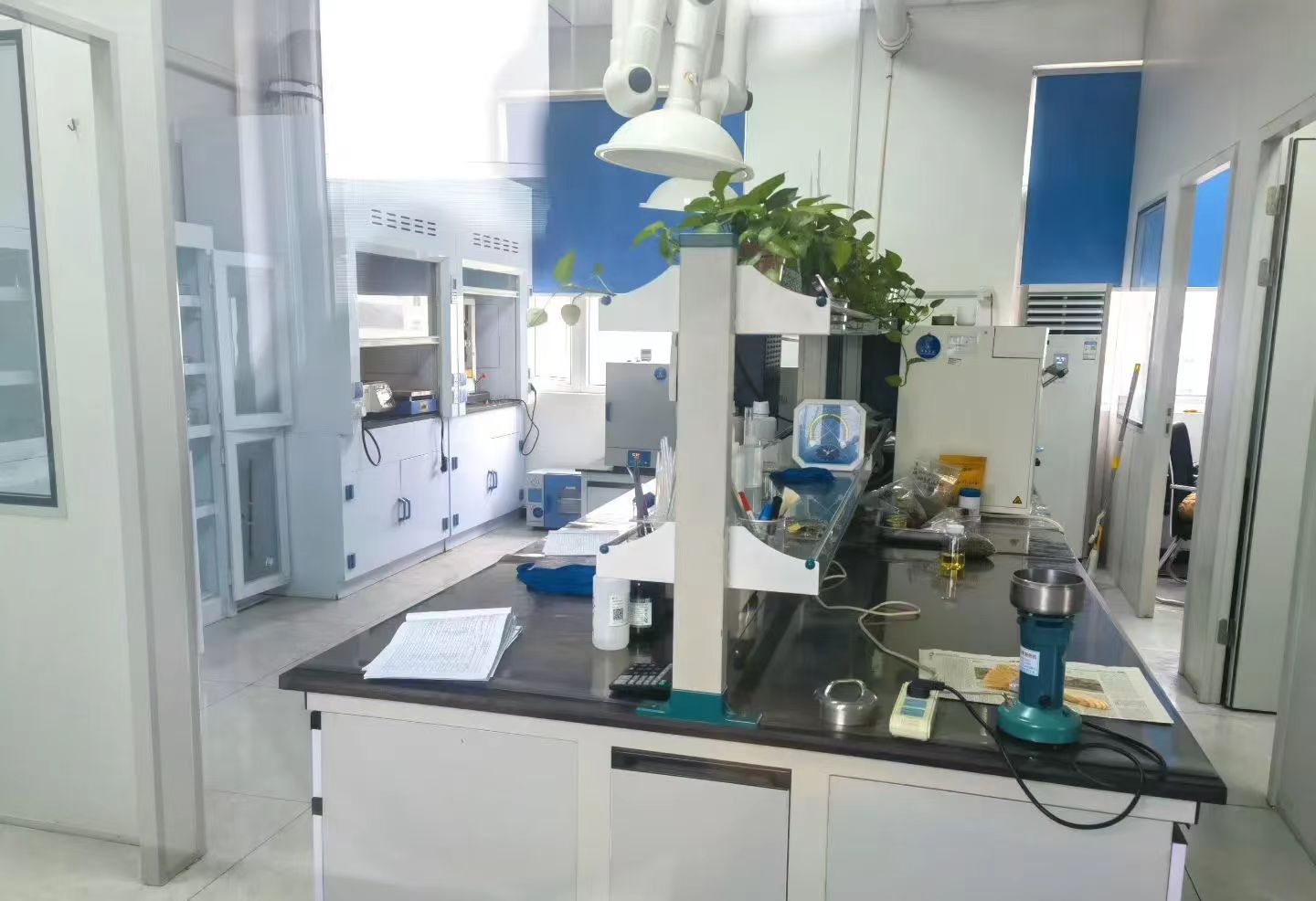
A testing plan should be designed around the actual product, its ingredients, manufacturing process, and destination market.
It should not be copied from an unrelated formula.
Depending on the product, testing may cover:
- Moisture, crude protein, crude fat, crude fiber and ash
- Selected minerals or other required nutrients
- Relevant microbiological indicators or pathogens
- Mycotoxins, heavy metals or other contaminants where required
- Physical properties such as kibble size, water activity or package integrity
Not every parameter needs to be tested at the same frequency. Some checks may apply to every commercial batch, while others are periodic verification tests.
Before ordering, ask the manufacturer to explain:
- Which tests apply to every batch
- Which tests are performed periodically
- Which tests are completed internally
- Which tests are sent to an external laboratory
- What happens when a result does not meet the limit
Where an external laboratory report is required, check whether the relevant test falls within the laboratory’s accredited scope. ISO/IEC 17025 establishes requirements for the competence, impartiality and consistent operation of testing and calibration laboratories.
The Certificate of Analysis, or COA, should be linked to the shipment’s production batch.
A useful COA normally identifies:
- Product name
- Batch or lot number
- Production or sampling date
- Tested parameters
- Specification limits
- Actual results
- Units of measurement
- Laboratory or manufacturer identity
- Release authorization
A generic report without a matching batch number is not evidence for the current shipment.
A COA also has limits. It reports selected results for a defined sample or batch. It does not prove that every possible hazard was absent, and it cannot replace ingredient control, sanitation, production records, or traceability.
Can Every Finished Batch Be Traced?
A usable traceability system connects the number printed on the package to the records behind the product.
From one finished lot code, the manufacturer should be able to identify:
- The formula revision
- Major raw-material lots
- Production date and line
- Key manufacturing records
- Packaging-material lot
- Finished-product results
- Release decision
- Shipment destination
EU General Food Law defines traceability as the ability to trace and follow food, feed and ingredients through all stages of production, processing and distribution.
Even when a product is sold outside the European Union, this provides a useful operational benchmark for private label buyers. See Regulation (EC) No 178/2002.
Traceability becomes especially important when a customer reports a quality problem. The manufacturer needs to determine whether the issue affects one package, one lot, several related batches or a wider range of products.
Retained samples support this investigation. A correctly identified and stored sample allows the factory to compare the original batch with a product returned from the market.
Ask how samples are collected, sealed, stored and retained. A retained sample has little value if its lot number or storage history is unclear.
What Happens If a Batch Does Not Meet the Specification?
Quality control is not only about confirming acceptable results. It must also define what happens when something goes wrong.
When a material, process value, or finished-product result falls outside its limit, the affected product should be identified and isolated. The manufacturer then needs to investigate the cause and decide whether the product can be reworked, downgraded, rejected, or destroyed.
The decision must be documented and approved by an authorized person.
Before placing an order, buyers should understand who is responsible for:
- Investigating a failed result
- Approving product disposition
- Informing the customer
- Completing corrective action
- Managing a withdrawal or recall if required
ISO 22000 provides a framework for food-safety management systems and helps organizations identify and control food-safety hazards. Certification can support supplier evaluation, but the buyer still needs to verify the legal entity, manufacturing site, certified scope, and validity period.
See ISO 22000 food safety management and our broader Pet Food Safety Guide.
How Pet Secret Biotechnology Applies These Controls
Pet Secret Biotechnology Co., Ltd. is an OEM, ODM, and private label pet food manufacturer in Linyi, Shandong, China.
Our manufacturing system combines formula development, selected raw-material control, enclosed automated production, batch records, testing, and packaging preparation.
For private label projects, our capabilities include:
- More than 30 production-proven dog and cat food formulas
- An approximately 13.3-hectare poultry and pigeon farming base
- Fully enclosed automated production
- Siemens-controlled enzymatic hydrolysis for applicable formulas
- HACCP, ISO 9001 and ISO 22000 management systems within their applicable scope
- Batch testing and COA support based on agreed project requirements
Our designed dry-pet-food capacity is up to approximately 11,000 metric tons per month. Standard MOQ generally starts from 5 metric tons per product, depending on the formula and packaging.
These capabilities provide a manufacturing foundation. They do not remove the need to approve each product individually.
Before production, we confirm the intended market, formula, nutritional targets, package size, testing plan, and required documents with the buyer. This connects the commercial order to a specification that can be produced, inspected and reordered consistently.
Private Label Pet Food Quality Control Checklist
Use this summary before approving commercial production.
| Stage | What to verify | Evidence to request |
|---|---|---|
| Product definition | Species, life stage and product format | Signed product specification |
| Formula | Ingredients, additives and nutritional targets | Approved formula or formula code |
| Raw materials | Supplier and incoming-lot controls | Specifications and receiving records |
| Label | Guaranteed analysis and approved claims | Final label text and artwork |
| Packaging | Material, size, seal and barrier requirements | Signed packaging specification |
| Production | Key process parameters and inspection points | Batch and in-process records |
| Cleaning | Contamination and cross-contact controls | Cleaning and production procedures |
| Testing | Batch and periodic test requirements | Agreed testing plan |
| COA | Product-specific and batch-specific results | COA matching the shipment lot |
| Traceability | Connection from ingredients to shipment | Lot-code and traceability records |
| Batch release | Authorized review before shipment | Release record |
| Problems | Containment, investigation and corrective action | Non-conformance and recall procedures |
No single item proves quality by itself. Confidence comes from the way these controls work together.
Frequently Asked Questions
What is pet food quality control?
Pet food quality control is the documented system used to confirm that ingredients, production, packaging and finished batches meet agreed safety, nutritional, physical and commercial requirements.
Is a factory certificate enough to prove product quality?
No. A certificate shows that a defined management system or scope has been audited. It does not prove that every commercial batch meets the buyer’s specification.
Buyers also need product specifications, production records, testing, a batch-specific COA and traceability evidence.
Does every pet food batch need a COA?
The required batch-release documents must be agreed before production. When a COA is required, it should identify the exact product and production lot and report the agreed parameters.
Testing frequency can differ by parameter and destination market.
Does automated manufacturing guarantee quality?
No. Automation improves dosing accuracy, repeatability, monitoring and recordkeeping. It still needs to work with controlled ingredients, sanitation, maintenance, trained personnel, inspection and testing.
Can the same quality checklist be used for every country?
The core manufacturing checks are widely applicable, but registration, approved ingredients, testing, health certificates and labeling rules vary by destination.
The importer should confirm local requirements before formula approval, packaging printing and commercial production.
Final Takeaway
Private label pet food quality control does not depend on one certificate, one sample or one laboratory report.
It depends on a clear product specification, controlled materials, repeatable production, risk-based testing, batch traceability and a defined response when results fall outside the agreed limits.
The most useful question for a buyer is not simply:
“Does the factory test pet food?”
It is:
“Can the manufacturer show how this product and this production batch were made, tested, released and traced?”
To discuss a private label dog food or cat food project, contact Pet Secret Biotechnology with your target market, formula requirements, package size, and expected order quantity.
Related Resources
- Private Label Pet Food Manufacturing: A Complete Guide for Brand Owners
- Private Label Pet Food Cost and MOQ Guide
- Pet Food Quality Control and Safety FAQ
- How to Choose a Reliable OEM Pet Food Manufacturer in China